

Protecting the Authentic Self:
OCD Treatment with Queer and Trans Clients
2 NBCC CEs • $120
On Demand Course with Jenna Stone, LCSW-C, and Shir Wolf, LCSW-C


About this course:
What happens when your client is questioning or exploring their sexual orientation or gender identity and also has OCD? They may be thinking about coming out, considering transition, or simply sitting with uncertainty about who they are as a person. How do you know whether that uncertainty is the authentic self trying to emerge, or OCD doing what OCD does best? And what happens when you get it wrong?
Sexual Orientation OCD (SO-OCD) and Gender Identity OCD (GI-OCD) can impact clients across the gender and sexuality spectrum by fueling doubt about who they are, and can interplay with sexual and gender minority stress in ways that make the OCD harder to see and harder to treat. Autistic clients who live at this intersection face an additional layer of complexity: low context sensitivity makes it harder to use social reference points to gauge whether identity-related doubt is reasonable or obsessional.
Historically, the treatment of SO- and GI- themed OCD has inadvertently reinforced LGBTQIA+ stigma and lent credibility to the client’s OCD story. LGBTQIA+ affirming providers often have little to no training in OCD, while OCD specialists may have limited experience with the many ways these themes show up and impact queer, trans, and autistic clients. Both gaps cause harm.
This course closes those gaps. Whether you’re a provider of LGBTQIA+ affirming care or an OCD specialist, you will leave with tools to differentiate reasonable doubt from obsessional doubt and the clinical confidence to support queer and trans clients at this intersection without causing harm in the name of helping.
What’s Included:
2 hour live session with Q&A
slides & resources
2 NBCC CE hours*
Price: $120
Objectives
Participants will be able to…
Distinguish clinical presentations of SO-OCD and GI-OCD from authentic sexual orientation and gender identity exploration in queer, trans, and neurodivergent clients, including how minority stress, trauma, and low context sensitivity in autistic clients complicate differential assessment.
Describe identity-affirming, justice-based strategies for working with queer, trans, and autistic clients with OCD, including how to recognize when attempts at affirming interventions can inadvertently function as reassurance and to deliver evidence-based treatment without pathologizing identity.

Did You Know?
OCD is often invisible and gets missed by well-meaning clinicians because compulsions can manifest as mental rumination and reassurance seeking.
Research suggests that it can take an average of 14-17 years from the onset of OCD symptoms to get a correct diagnosis and effective treatment.
It is estimated that 25% of people with OCD are Autistic, though this figure may be as high as 37%.
Untreated OCD can be a barrier to the process of coming out or taking desired steps to live in alignment with one’s current understanding of self.
The chronic stress of navigating stigma, discrimination, and marginalization can make OCD feel more believable and harder to treat in LGBTQIA+ clients.
Inferential confusion is a reasoning error that occurs more in people with OCD where you distrust your senses and give precedence to imagined possibilities and their associated feared outcomes, experienced as real or imminent.
Meet the Instructor
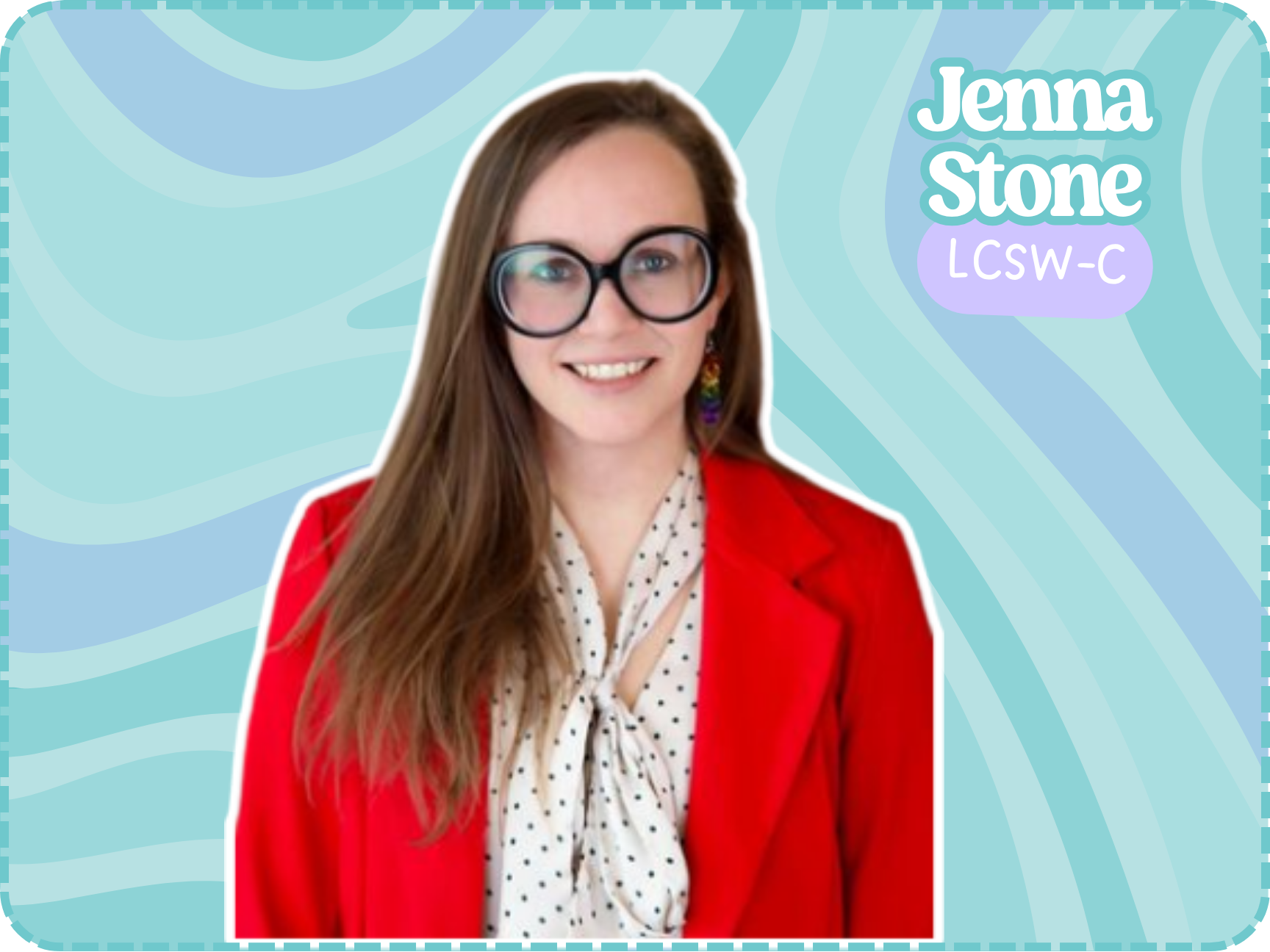
Jenna Stone, LCSW-C
Jenna (she/they) is a queer, late-diagnosed AuDHD PDAer, fully recovered from an eating disorder, with lived experience of OCD. They are a Certified Body Trust Provider® and the founder of Side Quest Psychotherapy, a specialty OCD and eating disorders practice based in College Park, Maryland providing neuroaffirming, identity-affirming care across MD, VA, and FL and nationwide recovery coaching services. Jenna offers neuroaffirming autism and ADHD assessments alongside evidence-based therapy for eating disorders, ARFID, OCD, body-focused repetitive behaviors, and PANS/PANDAS. Their therapeutic approach is anti-carceral, HAES-aligned, and liberation-focused, built for people who have spent far too long being misunderstood by a system not designed for them. When Jenna is not in the therapy room, you will find them hiking in the woods, rolling dice, crafting something they did not plan to make, or deep in a side quest they did not plan on starting. You can find Jenna at @sidequestwithjenna or @sidequestpsychotherapy on Instagram, or at sidequestpsychotherapy.com.
Meet the Instructor
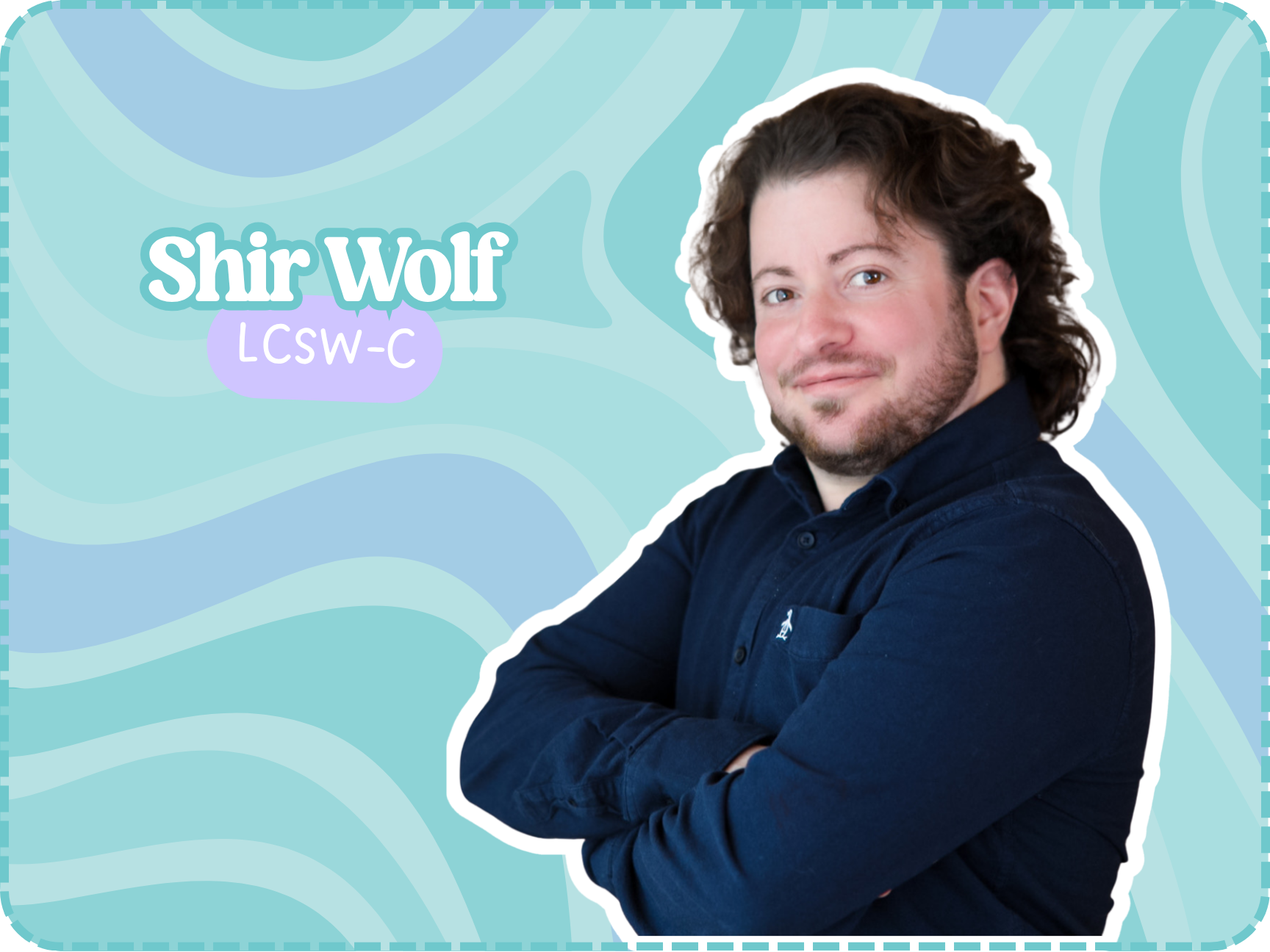
Shir Wolf, LCSW-C
Shir (they/he) is a queer, trans, audhd Licensed Clinical Social Worker, EMDRIA- consultant/certified therapist and graduate level field instructor practicing in Baltimore, Maryland. With over a decade of experience providing therapy across community mental health, school-based and private practice settings, and lived experience of long term eating disorder recovery and OCD, Shir specializes in providing affirming care to trans, intersex, queer, autistic and ADHD adolescents and adults with a passion for supporting clients navigating the intersections of complex trauma, eating disorders and OCD. Their approach is anti-carceral, gender + neuro affirming, HAES aligned and rooted in a liberation focused framework. Outside of their clinical work, Shir is often creating electronic music, playing piano and synths, spending time with family, friends, and queer and trans community, and walking and hiking with their velcro pitty dog, Kai.You can find Shir at www.wolftherapyandconsulting.com, @wolftherapyandconsulting (IG) and facebook.com/WolfTherapyAndConsulting