

Identifying and Treating Dissociative Stimming
1.5 NBCC CEs • $90
On Demand Course with Lacey Cottingham, LCSW


About this course:
Clients walk in the door every day, engaging in behaviors to increase regulation. Sometimes they feel distressed by them, and other times they report they feel good, but are worried about being "stuck" doing them. What do you do when the behaviors look suspiciously like dissociation? You want to be neuroaffirming, let your clients be themselves in session, but you also feel compelled to not allow harmful dynamics to continue. How can you tell the difference?
Or maybe you have a patient’s loved one describing the client becoming locked in repetitive acts for hours? Maybe they confide in you the fear that their loved one might become "addicted". How can you figure out if this is really a problem, or just something to educate through?
In this course we will dive into what self-stimulatory behaviors (stims) are, their purpose, what they look like when they are helpful, and what they look like when it’s a sign of something deeper. Treatment options for the underlying cause will also be suggested.
What’s Included:
1.5 hour live session with Q&A
slides & resources
1.5 NBCC CE hours*
Price: $90 for On Demand
Objectives
Participants will be able to…
Identify 5 stims and apply their knowledge to demonstrate the difference between dissociation and stimming.
Differentiate between a dissociative stimming and non-dissociative regulation stimming for each of their clients.
Revise and propose changes in their current treatment approaches for dissociation with neurodivergent clients.

Did You Know?
Neurodivergent clients are at a higher risk for trauma, thus being able to spot and treat dissociation is critically important.
Stimming is a natural part of the neurodivergent experience, but sometimes it’s not enough to process an aversive event, leading to clients being stuck in loops.
Stims aren’t limited to what you do with your hands! They can be full body, internally experienced, or cognitive!
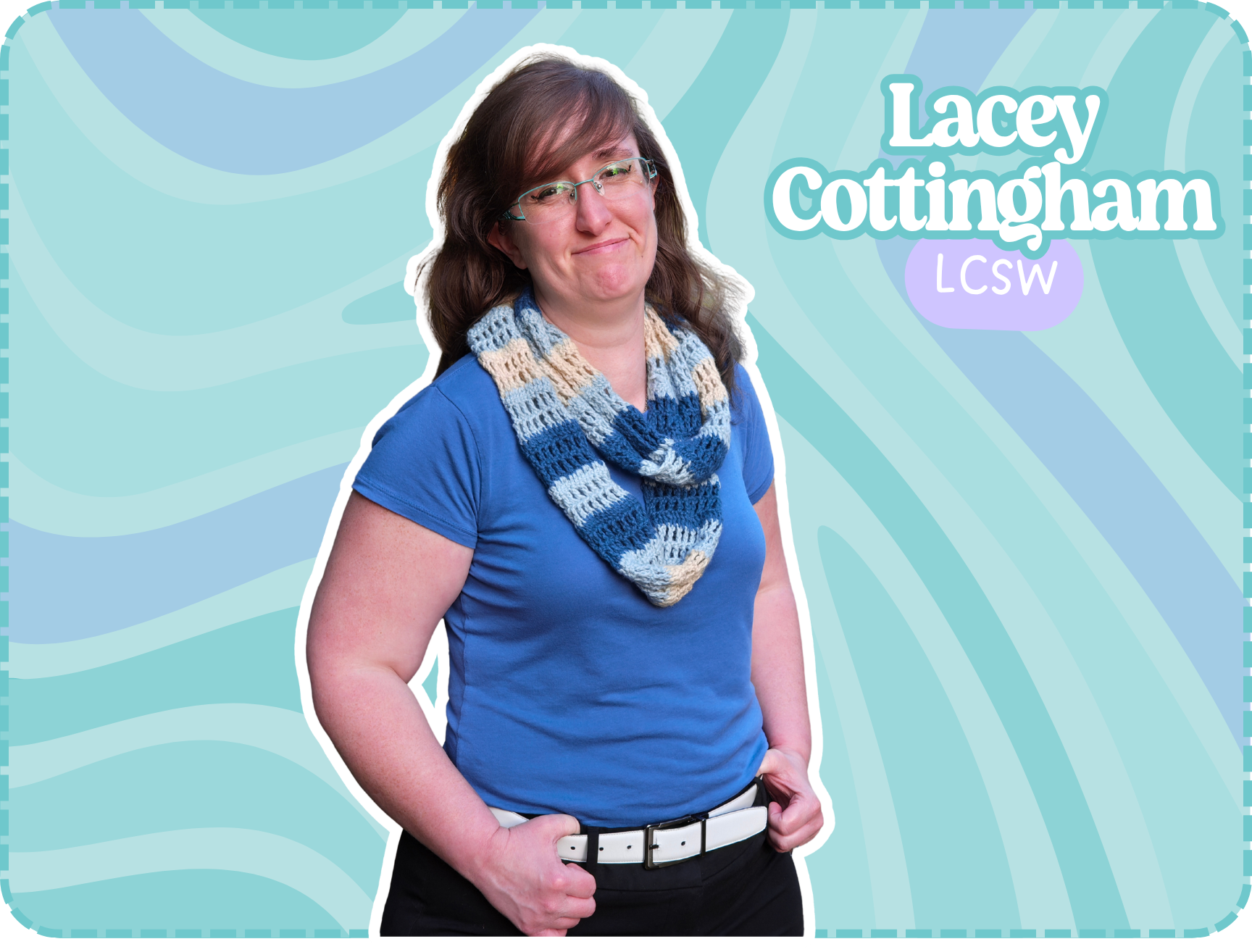
Meet the Instructor
Lacey Cottingham, LCSW
Lacey (Allene) Cottingham is a psychotherapist based out of North Carolina, USA. She primarily practices therapy with adults who feel chronically misattuned to the people around them, even feeling estrangement from their own bodies. Her career so far has been dedicated to helping people either fit in, or carve out a safe place to be themselves. While the professional terms and niches have changed through her career, that core problem has been at the heart of her work. At this time she works with individuals who identify as part of the Autism, ADHD, or Dissociative Identity Disorder communities. Questions and comments can be addressed in English or French to lcottingham@hushmail.com . Her professional website is Laceycottingham.com.
Allene (Lacey) Cottingham est psychopraticienne* en Caroline du Nord, aux États-Unis. Elle travaille principalement avec des adultes en difficulté avec leur corps et leur environnement. Elle accompagne actuellement des personnes atteintes d'autisme, de TDAH et de trouble dissociatif de l'identité pour les aider à construire une vie plus saine et autonome. Pour toute question, vous pouvez contacter Allene à l'adresse lcottingham@hushmail.com. Son site web est laceycottingham.com.
*Allene espère finaliser sa demande de transfert de qualification en psychothérapie en France en 2026.